What Power and Installation Type Should You Choose for a DC Fast Charger?
Release time: 2026-09-11
- DC Fast Charger Options at a Glance
- How Much Charging Power Do You Actually Need?
- 20–40kW: When a Wall-Mounted Charger Makes Sense
- 40–80kW: A Practical Range for Commercial Sites
- 120–160kW: For Higher-Demand Charging Sites
- When Is a Portable Charger More Useful?
- When Would a Dual Mobile Charger Be Useful?
- What If Grid Power Is Limited?
- Which Charger Works for a Highway or Service Area?
- Fixed or Mobile: Which Installation Type Is Right?
- Final Thoughts
- FAQ
There is no single power rating that works for every charging project. A small commercial parking area may only need a compact wall-mounted charger, while a highway service area or large fleet depot may require much higher output.
Installation type matters as well. Some chargers are designed to stay in one location, while others can be moved between different sites. Looking at power and installation together makes it easier to narrow down the right DC Fast Charger.
DC Fast Charger Options at a Glance
| Power / Type | Product Range | Typical Use |
| 20–40kW wall-mounted | PowerWall | Space-limited commercial sites |
| 40–80kW fixed | PowerCore | Urban and commercial charging |
| 120–160kW fixed | High-power DC chargers | Public stations, fleets, highways |
| 30–40kW portable | FastGo | Emergency and temporary charging |
| 40kW dual mobile | PowerMove | Fleet and temporary commercial use |
| 40–80kW battery-integrated mobile | Mobile DC Charger | Remote and selected off-grid applications |
How Much Charging Power Do You Actually Need?
A higher rating can be useful, but it is not automatically the best choice.
The first things to check are the number of vehicles being charged, how long they normally stay on site, and how much electrical capacity is available. The charging capability of the vehicles themselves also needs to be considered.
For example, a 160kW charger does not mean every vehicle connected to it will charge at 160kW. The vehicle’s charging system and battery condition can limit the actual charging rate.
For many commercial sites, 40–80kW can provide a reasonable balance between charging capacity and site requirements. Higher-power equipment makes more sense where vehicle turnover and charging demand justify it.
20–40kW: When a Wall-Mounted Charger Makes Sense
Installation space is often overlooked during charger selection.
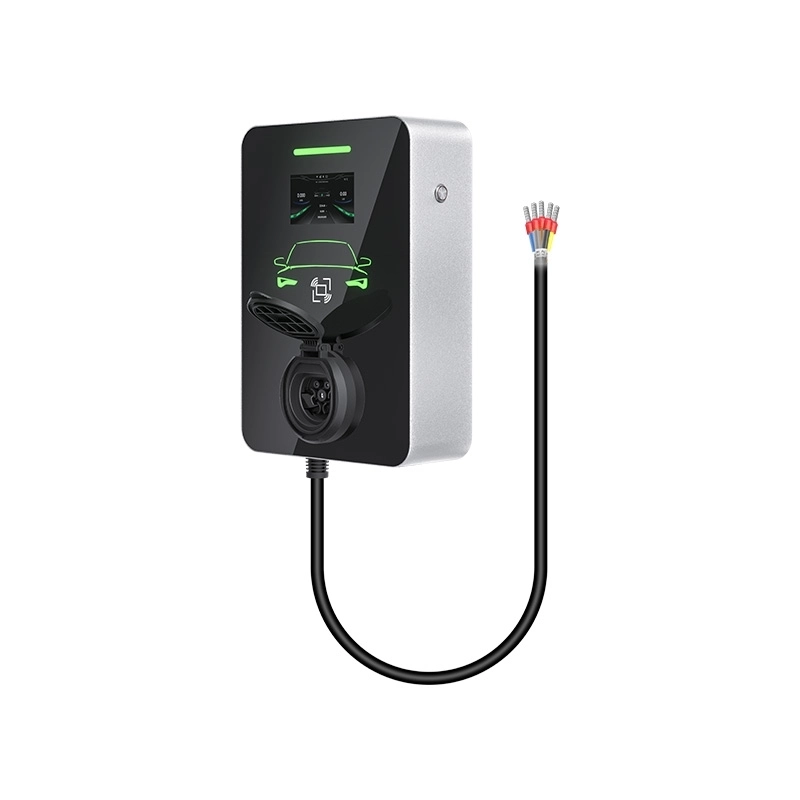
PowerWall 20kW, 30kW, and 40kW models use a wall-mounted design, which can help free up floor space. They are suitable for commercial locations where charging demand is moderate and a compact installation is preferred.
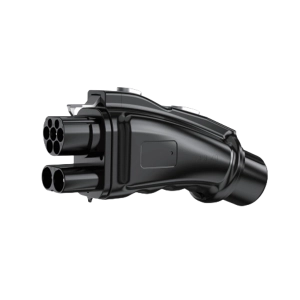
These chargers support CCS1, CCS2, GBT, CHAdeMO, and NACS interfaces and are designed for outdoor use.
A wall-mounted DC Electric Vehicle Charger is worth considering when there is a suitable wall and the electrical connection can be arranged without creating problems for parking or vehicle movement.
40–80kW: A Practical Range for Commercial Sites
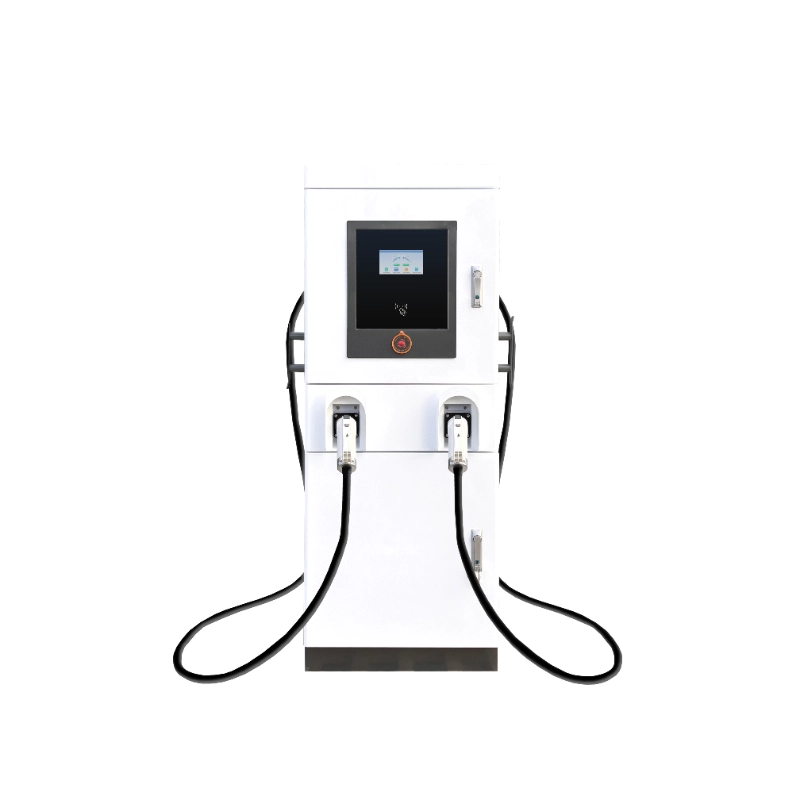
PowerCore models cover 40kW, 60kW, and 80kW. They are compact fixed chargers intended for commercial and urban charging applications.
This range can work well for locations that need more output than a small wall-mounted unit but do not necessarily require 120kW or 160kW equipment.
The choice between 40kW, 60kW, and 80kW should be based on expected charging demand and available electrical capacity. A site with steady but moderate traffic may not gain much from installing a charger with substantially more capacity than it can use.
120–160kW: For Higher-Demand Charging Sites
Higher-power chargers are more relevant when a site needs to handle more vehicles or reduce the time vehicles spend waiting for a charge.
KED offers 120kW and 160kW commercial DC Fast EV Charger models. Both support CCS1, CCS2, GBT, CHAdeMO, and NACS and are intended for outdoor commercial applications.
The 160kW version provides a higher rated output than the 120kW model, so it may suit sites with greater charging demand when the electrical infrastructure and vehicles can support that level. It should not be treated as the better choice for every project.
For public charging networks, highway service areas, and larger fleet operations, these power levels are worth evaluating alongside the site’s transformer capacity and expected vehicle traffic.
When Is a Portable Charger More Useful?
Fixed chargers are a good fit for permanent charging locations. They are less convenient when the charging requirement changes from one site to another.
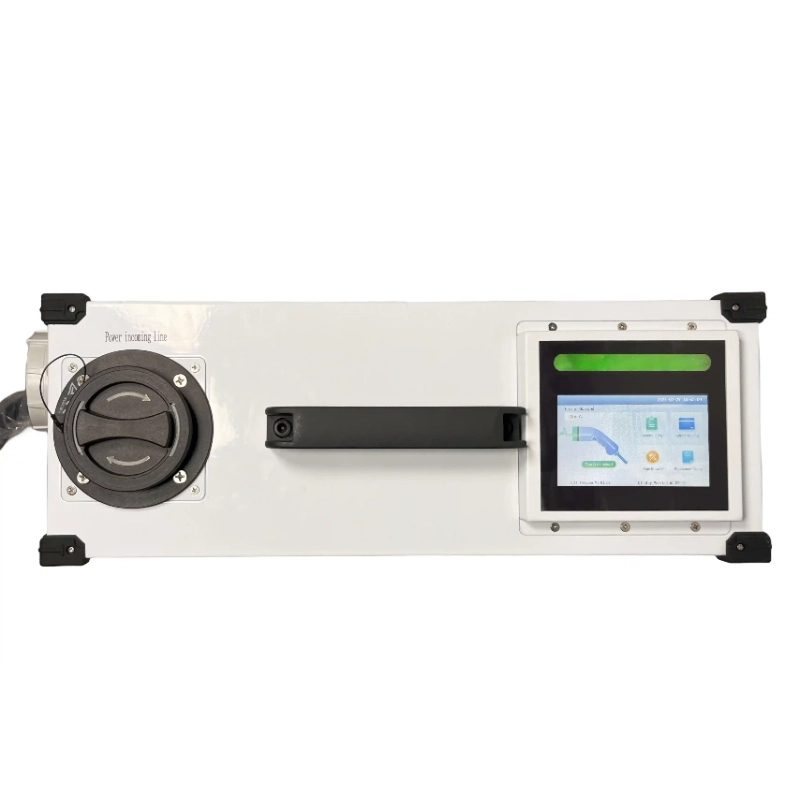
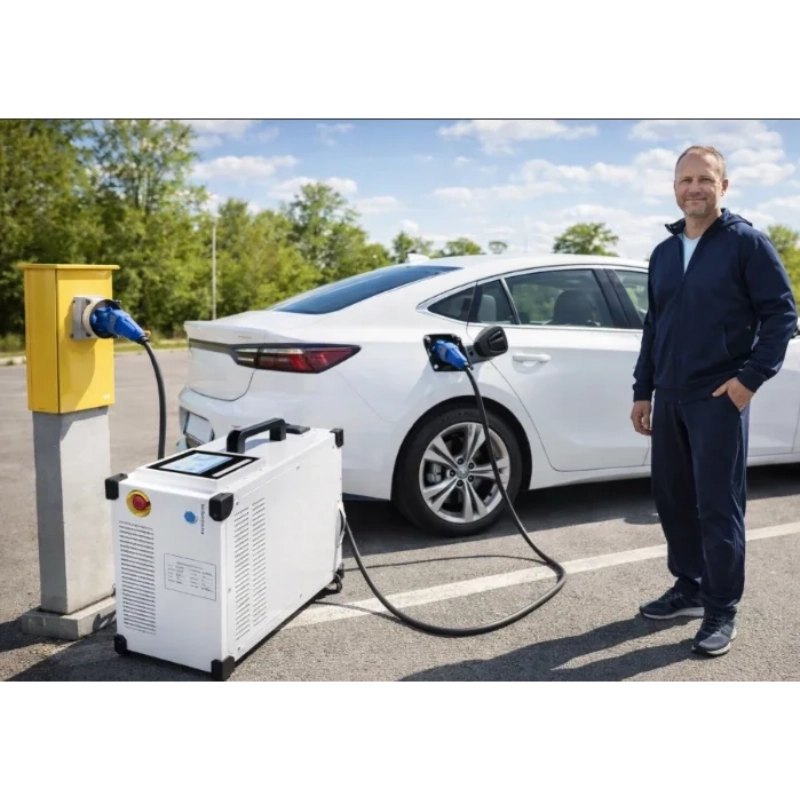
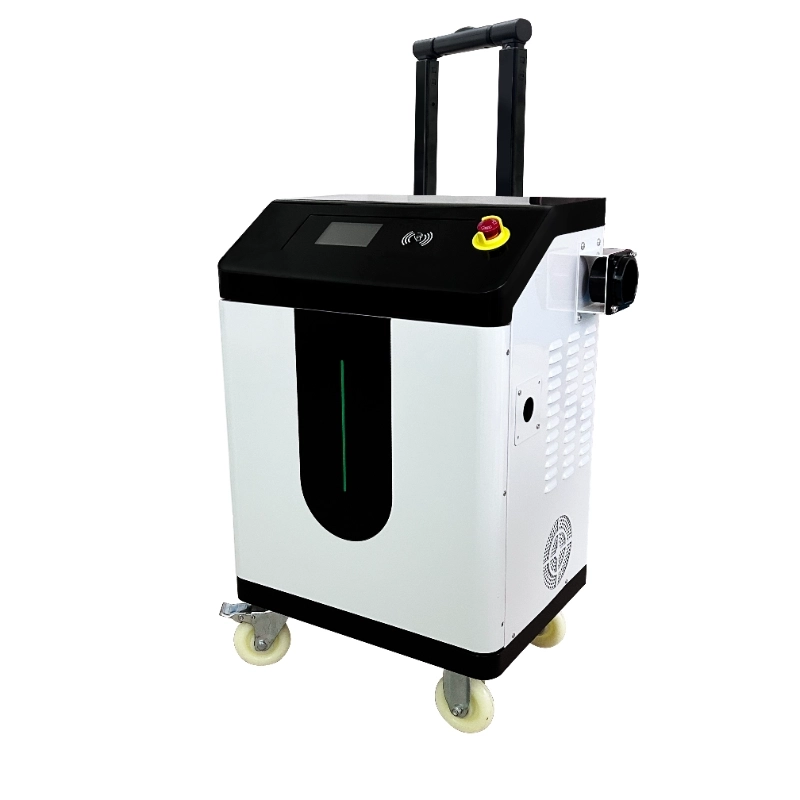
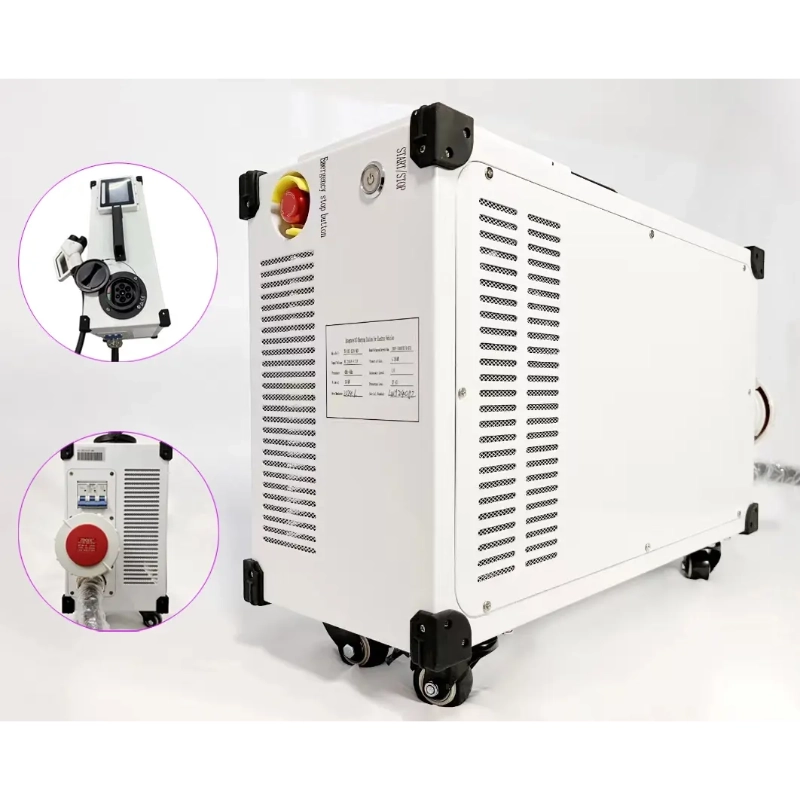
FastGo 30kW and 40kW portable chargers are designed for more flexible use. They can be transported between locations and support plug-and-play operation through a charging cable or CEE industrial plug.
This makes them useful for roadside assistance, workshops, temporary charging areas, and mobile charging services.
For these applications, portability can be more valuable than simply adding more charging power.
When Would a Dual Mobile Charger Be Useful?
A dual-output mobile charger can be useful when two vehicles need to be served without installing separate fixed charging equipment.
The PowerMove 40kW Dual DC Mobile Charger is intended for fleet and commercial applications. It can be moved to different charging areas and is suitable for temporary sites, fleet depots, commercial parking areas, and mobile charging services.
For operators whose charging locations change regularly, this type of setup can provide more flexibility than a permanently installed charger.
What If Grid Power Is Limited?
Some projects face a different problem: the desired charging location does not have convenient access to the grid.
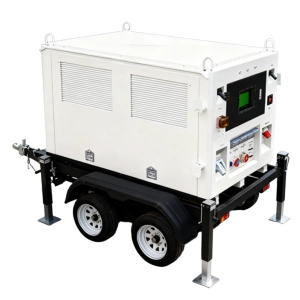
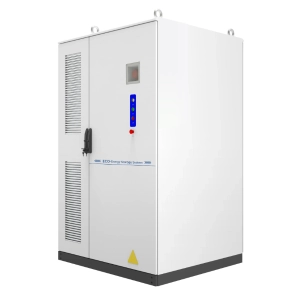
In this situation, a battery-integrated mobile DC EV Charger may be worth considering. KED’s Mobile DC Charger with Direct Battery Input combines a 40–80kW DC charger, battery energy storage cabinet, and smart energy management system. Solar PV integration and remote monitoring are also available as options.
This configuration can be useful for selected remote or temporary applications where energy needs to be managed more flexibly. The appropriate setup will depend on the required charging capacity, battery capacity, operating conditions, and available energy source.
Which Charger Works for a Highway or Service Area?
Highway charging generally calls for a different approach from a small urban parking area.
A service area with heavy vehicle traffic may benefit from 120kW or 160kW equipment, provided that the site’s electrical infrastructure can support it. These chargers can also be considered for commercial fleets and public charging networks with higher demand.
For smaller service areas, 40–80kW equipment may be enough. The right choice depends on actual traffic rather than the size of the charger alone.
Fixed or Mobile: Which Installation Type Is Right?
A simple way to compare the options is to look at how permanent the charging requirement is.
Choose a wall-mounted charger when floor space is limited and the charging point will stay in one place.
Choose a fixed floor-standing charger when the site has a regular charging demand and enough room for permanent equipment.
Choose a portable or mobile charger when the equipment may need to move between locations or the charging service is temporary.
Consider a battery-integrated mobile charger when grid access is limited or flexible energy supply is part of the project.
A Quick Selection Checklist
Before making a final decision, check:
- Required charging power
- Number of vehicles served per day
- Expected peak charging demand
- Vehicle charging capability
- Available electrical capacity
- Floor or wall space
- Indoor or outdoor installation
- Whether the equipment needs to move
- Whether battery storage or solar integration is needed
These factors usually narrow the choice much faster than looking at power ratings alone.
Final Thoughts
Choosing a DC Fast Charger is mainly about finding a practical match between power, installation, and actual site conditions.
PowerWall 20–40kW models are suited to compact wall-mounted installations. PowerCore 40–80kW models cover a wider range of urban and commercial charging needs. For high-demand public, fleet, and highway applications, 120–160kW chargers are worth considering. Portable and mobile models fill a different role where flexibility is more important than permanent installation.
Hefei KED Charging Technology Co., Ltd. has more than 10 years of experience in EV charging and energy storage. Its product range covers different charging power levels and installation formats, with OEM/ODM options available for projects that require customized hardware, branding, communication protocols, or integrated energy solutions.
FAQ
1. What power rating should I choose for a DC Fast Charger?
It depends on vehicle traffic, charging time requirements, vehicle capability, and available electrical capacity. KED’s range covers 20kW to 160kW options for different applications.
2. What is the difference between PowerWall and PowerCore?
PowerWall models are wall-mounted and available in 20kW, 30kW, and 40kW. PowerCore models are fixed chargers covering 40kW, 60kW, and 80kW and are intended for commercial and urban applications.
3. Which charger is suitable for temporary charging?
FastGo 30kW and 40kW portable chargers are designed for temporary and mobile applications such as roadside assistance, workshops, and temporary charging sites.
4. Can DC chargers be used in remote areas?
Yes, depending on the site’s power supply. For locations with limited grid access, a battery-integrated mobile charger with 40–80kW output can be considered.
5. Are these DC chargers suitable for outdoor use?
The KED DC charging models described above are designed for outdoor applications and have an operating temperature range of -20°C to +50°C. Site-specific electrical and installation conditions should still be checked before deployment.