How to Choose a DC Fast Charger for Public EV Charging Stations?
Release time: 2026-10-16
Table of Contents
As electric vehicle adoption continues to grow, public charging infrastructure must meet increasing demand for convenient, reliable, and accessible charging. Hefei KED Charging Technology Co., Ltd. specializes in EV charging and energy storage solutions, offering products for commercial charging networks, mobile charging, and other energy applications. For public charging operators, choosing the right equipment is an important step toward building a charging station that meets local demand and supports future expansion.
Selecting a DC fast charger involves more than comparing rated power. Operators also need to consider vehicle compatibility, electrical capacity, installation conditions, communication functions, and expected usage. Understanding these factors can help businesses select equipment that fits their site requirements and provides a consistent charging experience.
1. Determine the Charging Power Required
Charging power is one of the first factors to consider when planning public EV charging stations. Different locations serve different users, and the right power level depends on vehicle turnover, average parking time, and the available electrical supply.
High-power chargers are often suitable for locations where drivers expect to recharge and continue their journeys relatively quickly. Lower-power DC chargers may be appropriate for sites where vehicles remain parked longer or where electrical capacity is limited.
For example, 120kW and 160kW chargers can be considered for public charging hubs with relatively high demand. Compact 40kW, 60kW, and 80kW units may suit smaller commercial locations or sites with more moderate charging requirements.
However, rated charger power does not guarantee that every vehicle will charge at that rate. Actual charging speed depends on the vehicle’s maximum DC charging capability, battery condition, state of charge, temperature, and the power available at the site.
Before selecting a charger, operators should estimate peak demand, expected daily charging sessions, and the number of vehicles likely to charge simultaneously.
2. Match the Charger to the Location
The physical layout and operating conditions of a charging site affect which charger design is most suitable.
Public charging stations may be located in shopping centers, public parking facilities, roadside stops, commercial properties, or dedicated charging hubs. Each environment presents different requirements for space, installation, accessibility, and equipment protection.
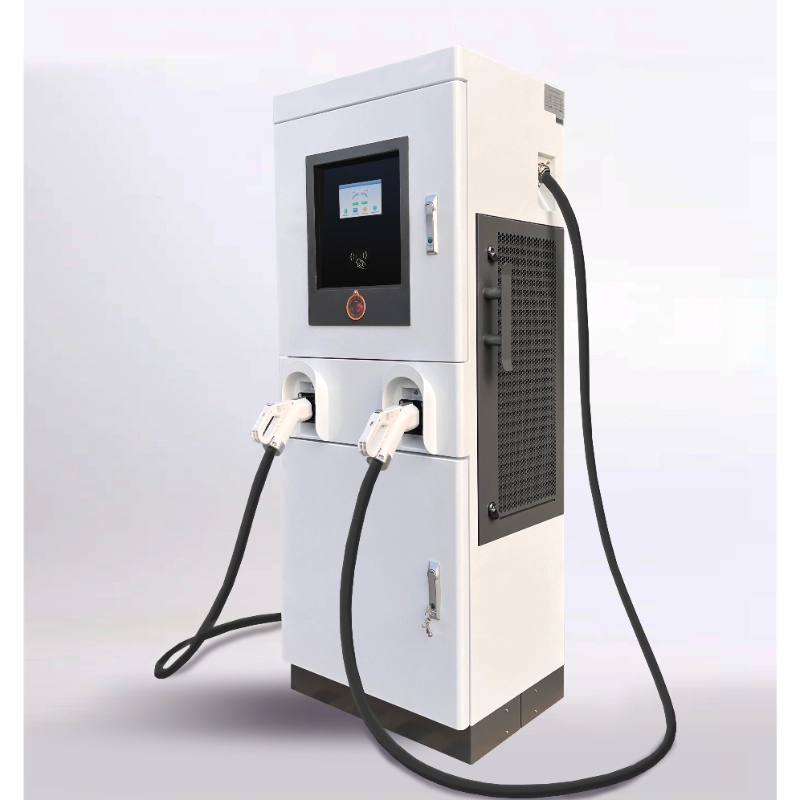
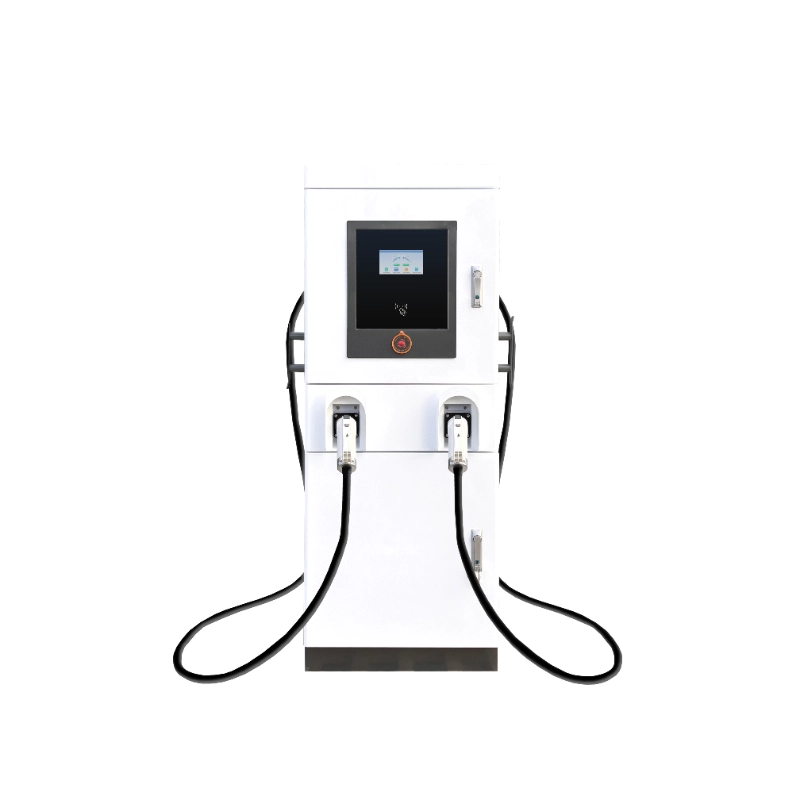
Floor-mounted chargers are often considered for dedicated charging bays and larger public charging sites. They can provide a practical solution where operators need to install equipment in designated areas and plan for additional charging points.
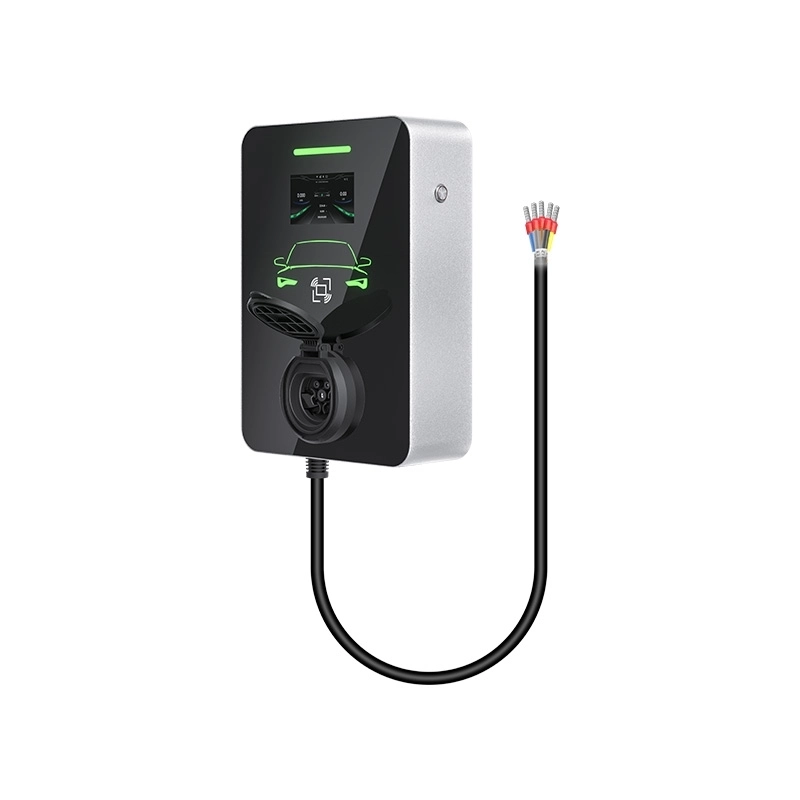
Wall-mounted DC chargers may be useful where suitable walls are available and preserving floor space is a priority. However, the installation location must support the equipment’s weight, electrical connections, cable access, and maintenance requirements.
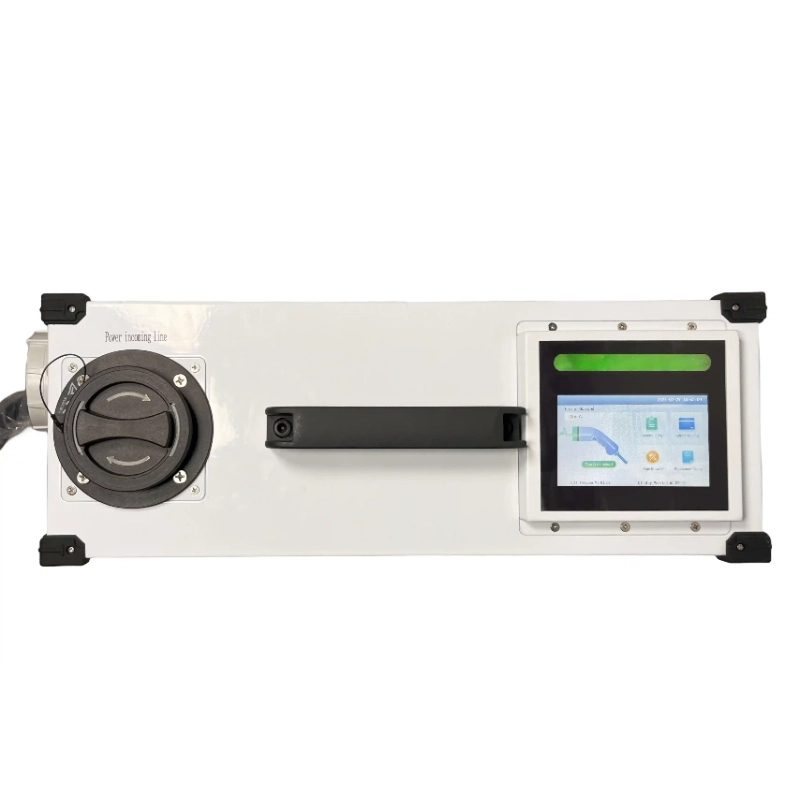
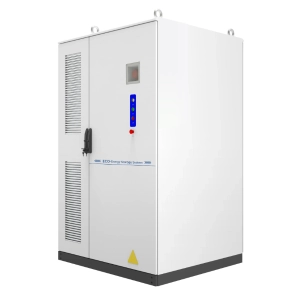
Mobile DC chargers offer another option for temporary charging locations or situations where fixed infrastructure is unavailable or inconvenient. They can support flexible deployment, although their suitability depends on the available power source, mobility requirements, and intended operating conditions.
When planning a site, operators should also allow enough room for vehicle access, cable handling, maintenance, and future equipment expansion.
3. Check Vehicle and Connector Compatibility
Public charging stations may serve vehicles from different manufacturers and markets. Connector compatibility is therefore essential when selecting a DC EV charger.
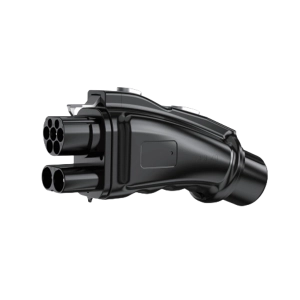
Common DC charging standards include CCS1, CCS2, GB/T, CHAdeMO, and NACS. The appropriate connector depends on the vehicles expected to use the station and the requirements of the local market.
Before purchasing equipment, operators should verify which connector standards the charger supports and whether these match the intended vehicle fleet. They should also confirm the charging voltage range and the vehicle’s supported charging protocol.
Many KED DC charging models support multiple connector options, including CCS1, CCS2, GB/T, CHAdeMO, and NACS, depending on the product configuration. This provides options for operators serving different vehicle markets.
Connector availability should always be confirmed for the specific model being purchased. A list of supported connector options does not necessarily mean every connector is included in every standard configuration.
4. Consider Network Connectivity and Remote Management
For public charging operators, the ability to monitor equipment and manage charging sessions can be important, particularly when multiple chargers operate across one or more locations.
Network connectivity can help operators monitor charger status, identify certain faults, and review operating information without checking every unit manually. Depending on the charger and software platform, remote management may also support configuration, diagnostics, and charging-session management.
Ethernet and 4G connectivity are available on several KED DC charging models. Selected commercial models also support the Open Charge Point Protocol (OCPP), which can facilitate communication between compatible charging stations and a central management platform.
For example, the PowerMax 120kW and PowerCore 40kW, 60kW, and 80kW models are listed with OCPP 1.6 support, while the PowerMax 160kW model supports OCPP 1.6 and 2.0 according to the supplied product specifications.
Operators should confirm compatibility between the charger’s OCPP implementation and their chosen management software before deployment. They should also evaluate mobile network coverage, cybersecurity requirements, and the availability of technical support.
5. Evaluate Electrical Capacity and Operating Conditions
Installing a high-power charger requires careful planning of the site’s electrical infrastructure. A charging station may need additional electrical distribution equipment, circuit protection, cabling, and other installation work depending on its rated power and existing supply.
Before selecting a DC fast charger, operators should check the available supply capacity and consult a qualified electrical professional about the installation requirements. If several chargers are planned, the assessment should account for their potential combined demand and the site’s other electrical loads.
Environmental conditions are another important consideration. Outdoor public chargers may be exposed to rain, dust, temperature changes, and direct sunlight. Operators should review the equipment’s specified operating temperature, enclosure protection rating, ventilation requirements, and installation instructions.
The KED models described in the supplied specifications generally list an operating temperature range of -20°C to +50°C. Actual environmental suitability should be verified against the specific model’s documentation and the conditions at the installation site.
Routine access for inspection and maintenance should also be included in the site layout. Equipment that is difficult to access may take longer to service when a fault occurs.
6. Compare Suitable KED DC Charging Models
Different public charging sites require different combinations of power, installation design, and operating flexibility. The following KED products provide examples of options that operators can evaluate.
| Product | Rated power | Design | Potential application |
| PowerMax | 120kW | Floor-mounted DC charger | Public charging hubs and commercial charging sites |
| PowerMax | 160kW | Floor-mounted DC charger | Locations requiring higher rated charging power |
| PowerCore | 40kW | Compact floor-mounted DC charger | Smaller commercial charging locations |
| PowerCore | 60kW | Compact floor-mounted DC charger | Sites with moderate charging demand |
| PowerCore | 80kW | Compact floor-mounted DC charger | Commercial sites requiring a higher output than 40kW or 60kW models |
| PowerWall | 20kW–40kW | Wall-mounted DC charger | Sites where floor space is limited |
| FastGo | 30kW–40kW | Portable DC charger | Temporary charging and flexible deployment needs |
These products should not be treated as interchangeable. The most appropriate option depends on the site’s electrical supply, available installation space, anticipated vehicle demand, and operating model.
For example, a dedicated public charging hub with high vehicle turnover may evaluate the PowerMax 120kW or 160kW models. A smaller commercial parking facility may find the PowerCore range worth considering, while a location with suitable wall space may evaluate PowerWall. FastGo may be relevant where portability is a priority.
The table provides a starting point for comparison rather than a universal recommendation. Operators should review the complete technical specifications and confirm the intended application with the supplier.
7. Plan for Maintenance and Future Expansion
A public charging station should be evaluated over its expected operating life, not only by its purchase price. Maintenance access, spare-part availability, technical support, and software compatibility can all affect long-term operation.
Before purchasing equipment, operators should ask about warranty coverage, recommended inspection intervals, service arrangements, and procedures for handling faults. Regular checks of charging cables, connectors, electrical connections, cooling components, and communication status can help identify problems before they cause extended downtime.
Future expansion should also be considered during the planning stage. If charging demand increases, adding more units may require additional electrical capacity, parking spaces, cable routing, and network management resources. Planning these requirements early can reduce the need for major site changes later.
It is also useful to distinguish between equipment that can be expanded within the existing electrical infrastructure and equipment that would require an upgraded power supply. This helps operators make more realistic deployment plans.
Conclusion
Choosing equipment for public EV charging stations requires a balanced assessment of charging power, vehicle compatibility, site layout, electrical capacity, connectivity, and maintenance needs. High-power chargers may suit busy public charging hubs, while compact, wall-mounted, or portable models can address different space and deployment requirements.
Hefei KED Charging Technology Co., Ltd. provides a range of EV charging and energy storage products for commercial and flexible charging applications. By comparing the available models against actual site requirements and confirming technical details before installation, operators can select a suitable DC electric vehicle charger for their public charging projects and prepare their infrastructure for changing demand.
FAQs
1. What power rating is suitable for a public EV charging station?
The appropriate rating depends on expected charging demand, vehicle charging capabilities, available parking time, and electrical supply capacity. Higher-power models may suit busy charging hubs, while lower-power DC chargers can serve locations with more moderate demand.
2. What should operators check before purchasing a DC fast charger?
Key factors include rated power, connector standards, voltage range, electrical infrastructure, environmental protection, network connectivity, warranty, and maintenance support.
3. Can one public charging station serve different EV brands?
Yes, provided the charging equipment supports the connector and communication standards required by the vehicles using the station. Operators should verify compatibility for the specific charger configuration and local vehicle market.
4. Are portable DC chargers suitable for public charging?
Portable DC chargers can be useful for temporary charging sites and flexible deployment. Their suitability depends on the power source, output rating, operating conditions, and the site’s charging requirements.